Search Results
BCStrategies
Search this site
73 results found with an empty search
- 8x8 Analyst Summit 2026: Taking an Offensive Position
At the 8x8 Analyst Summit in Silicon Valley, CEO Sam Wilson made it clear that the company is playing offense. With four consecutive quarters of growth and 21 quarters of profitability, 8x8 is building on a stable foundation as it uses its network, platform, and past acquisitions to compete in an AI-driven market. Wilson was direct in describing how he views the market’s AI messaging and why 8x8 believes its approach is more practical. As he put it, "Companies that say they’re AI companies are stupid idiots – it’s like saying you’re an internet company 20 years ago. AI will be in everything.” It's not about being an AI company - it's all about using AI to solve our customers' problems. Our customers care about their business, not if AI does the routing or not." Key Themes From the Event Several themes stood out at the summit: · 8x8 positions its “One Platform” as a fully integrated environment spanning telephony, digital channels, IVA, video, and CX. · Its AI strategy centers on partnering for models rather than building them internally. As Wilson explained, “We own the network and the data - the platform is the product.” · The company placed strong emphasis on frontline workers, or “the 70% the market forgot.” Wilson argued that every worker should be treated as a first-class worker and that businesses need to stop overlooking digital orphans - employees without laptops, email, or other standard tools. · 8x8 is leaning in on usage-based AI pricing, which lowers the barrier to entry and gives organizations room to experiment and prove AI's value without a large upfront commitment. · The partner ecosystem is central to 8x8’s strategy. 8x8 provides “the network and the pipes,” while partners add complementary technologies and services. As Victor Belfor, GVP Business Dev & Strategic Partnerships, noted, “The ecosystem is part of our product. We’re the one back to pat, providing a single contract, low TCO, and no finger pointing. We own this from beginning to end – delivery, support, integration, etc." New Products Expand the Platform Story 8x8 also used the event to introduce several products, including 8x8 Resolve and 8x8 Pulse. 8x8 Resolve is a mobile-first critical communications and incident management solution designed to support businesses with distributed workforces. It helps organizations notify, track, and coordinate warehouse staff, retail associates, field technicians, and healthcare aides—workers who make up an estimated 70% of the global workforce and are often the last to know when something goes wrong. 8x8 Pulse is a conversational intelligence solution that turns conversations into business insights. It uses generative AI to analyze interactions and add context so the information can be used more reliably at the enterprise level. Pulse draws on conversation data to deliver interaction-based insights and recommendations for workforce management, customer engagement, sales, and operational improvement. It can analyze multiple communication channels, including calls, emails, voicemails, support tickets, external notes, CRM data, and more. According to Dhwani Soni, Global VP of Product Management, every conversation an organization has -customer calls, support interactions, emails, meeting transcripts, and CRM notes - creates data that can be mined for insight. 8x8 Pulse brings those sources together so organizations can generate insights from both structured and unstructured data. The company emphasized that while many organizations are generating large volumes of conversational data, much of it remains fragmented across systems. By bringing those sources into a single platform view, 8x8 aims to help businesses surface insights and improve decision-making across departments. Built on the conversations organizations already generate, 8x8 Pulse is designed to surface relevant intelligence for the right person at the right time, from executives to frontline employees. I spoke with Igor Mostovoy, Director, CPaaS Product, and Dhwani Soni, Global VP of Product Management, about Pulse and Resolve, as well as Engage. One Platform Hunter Middleton, Chief Product Officer, presented 8x8’s vision and roadmap, and how 8x8 will differentiate in the market. While much of his presentation was NDA, Middleton summarized many of the themes discussed throughout the event in this video interview. He covered 8x8’s transformation, the “One Platform” approach, and 8x8's thinking around agentic AI and 8x8 AI Studio. As Middleton explained, the “One Platform” approach goes beyond integrating UCaaS and CCaaS applications. It extends below the application layer to the communications fabric, creating a single communications system for the entire company. He also discussed 8x8’s approach to frontline workers and how non-contact-center staff, including employees without desk phones or laptops, can help customers resolve issues. He further explained how AI capabilities such as Agent Assist can help these workers support customers more effectively. Middleton also discussed AI Studio and 8x8’s approach to agentic AI. As he explained, 8x8 has taken a different route from many vendors by using the latest real-time APIs from LLM providers to enable more natural interactions, simplify workflow design, and shorten deployment timelines. This is an approach that was not practical even a year ago ,and gives 8x8 more flexibility to move quickly. 8x8 Technology Partner Synthflow As mentioned, ecosystem partners are a key part of 8x8’s strategy. Conversation AI vendor Synthflow is a new partner, providing an end-to-end Voice AI platform that enables businesses to design, launch, and operate Voice AI agents with configurable workflows, enterprise telephony, and analytics. I spoke with Synthflow’s VP of Channels and Alliances, Matt Alexander, about the company, its partnership with 8x8, and how Synthflow stands out in a crowded market for voice AI agents and conversational AI platforms. Final Thoughts The summit highlighted a company focused on execution, platform integration, and practical uses for AI. Rather than treating AI as a standalone strategy, 8x8 emphasized how it can support business outcomes, improve worker experiences, and simplify customer engagement. I’ve been saying for years that the walls are coming down between UCaaS, CCaaS, CPaaS, and CRM. 8x8 is focused on a single platform built around the capabilities customers need rather than the acronyms. By tightly integrating its technology with ecosystem partners, 8x8 is differentiating not just through individual applications, but through the platform itself. While 8x8 didn’t use the term “agentic” as often as some competitors, it is clearly laying the groundwork for agentic AI through AI Studio and partner-driven capabilities. 8x8 has evolved from its early days as a UCaaS vendor into a communications platform provider delivering AI-ready voice at global scale. The company sees an opportunity to support the broader workforce with integrated communications, CX, and AI capabilities. I agree with 8x8’s view that as AI handles routine tasks, every worker becomes more of a knowledge worker. The company’s focus on knowledge workers who “make up the 70% of the workforce that the market forgot” points to a sizable market opportunity. With 8x8 Engage and a soon-to-be-announced product, 8x8 appears well positioned to pursue that market. While some vendors are investing heavily in in-house AI, 8x8 is leaning on partners and newer capabilities from companies such as Anthropic and OpenAI. That approach may help the company move faster and stay flexible. Time will tell how well it works.
- Zendesk Relate and the Autonomous Service Workforce
Set aside any preconceived notions about Zendesk. While the company built its reputation around service and ticketing, its focus today is on the Autonomous Service Workforce, AI agents, and resolutions. At Zendesk Relate 2026, the company’s annual event that brought together more than 2,000 attendees, Zendesk outlined its vision for the Autonomous Service Workforce, built on the Zendesk Resolution Platform. Service and ticketing remain core parts of the business, but the company’s AI portfolio - including AI agents, AI Copilot, and AI QA -grew more than 100% over the past year. Zendesk’s broader mission is to resolve customer issues through a combination of AI agents and human agents, powered by the Zendesk Resolution Platform, a connected system of agents and copilots designed to support service operations. As CEO Tom Eggemeier noted during his keynote, Zendesk introduced the Resolution Platform last year with the idea that customer resolutions require specialization. Trained on roughly 20 billion ticket interactions, the platform unifies data, intelligence, and workflows. The Resolution Learning Loop creates a continuous cycle of improvement, allowing the system to learn from every interaction and become more effective over time. The shift underway goes beyond automation. It reflects service organizations moving from assisted workflows to autonomous resolution, from disconnected tools to a unified learning system, and from reporting on past activity to continuously improving future outcomes. Autonomous Service Workforce The central theme of the event was the Autonomous Service Workforce, a collection of specialized AI agents designed to perform specific functions. The strategy centers on: AI agents that execute tasks AI copilots that improve employee performance and support human agents by identifying customer intent, recommending responses, and suggesting next-best actions A learning loop that continuously makes the system smarter According to Shashi Upadhyay, President, Product, Engineering, and AI, Zendesk is building a workforce that not only assists employees, but also completes work and changes how service is delivered. He explained that “The future isn’t one general purpose bot – it’s a network of specialized agents – agents for billing, returns, collections, claims, etc.” Each agent is grounded in the appropriate data and designed to handle real-world complexity, while the system coordinates work and drives outcomes. These AI agents are aligned with customer workflows, integrated into customer environments, and available out of the box. A central component of this strategy is the Resolution Learning Loop, where every interaction becomes a learning signal that improves AI agent performance. The process focuses on identifying where AI failed, determining the root cause, learning from those failures, and feeding that information back into knowledge management systems to improve future interactions. More resolutions generate more learning data, which leads to additional recommendations and improvements, ultimately driving better outcomes over time. Outcome-Based Pricing This shift also requires a new business and pricing model. Zendesk argues that traditional seat-based software pricing is becoming less relevant in an AI-driven environment. Instead, the company is positioning itself as an early mover in outcome-based pricing, where customers pay only for outcomes produced by AI agents that are verifiably resolved or contained. According to Zendesk, “If we don’t resolve the problem, we don’t get paid; customers will only pay for outcomes that are verifiably resolved or contained." New Products and Anouncements Zendesk announced a large number of new products and capabilities at Relate, including: Agentic AI agents — specialized AI agents that can reason across messaging, email, voice, and backend systems. Built on Zendesk’s acquisition of Forethought, these agents operate across messaging, email, voice, and AI platforms, as well as both Zendesk and third-party service environments. Agent Builder, a no-code interface that allows teams to create and refine custom agents using natural language Voice AI Agents for both Zendesk Voice and Zendesk Contact Center Proactive copilots for agents, administrators, knowledge teams, analysts, and service leaders Action Flows, MCP, and expanded Knowledge Connectors that allow AI agents to take action across existing enterprise systems Zendesk Contact Center, a native unified contact center offering A modern ITSM solution built on the same Resolution Platform Zendesk Contact Center For analysts covering the contact center market, one of the key focuses at the event was Zendesk Contact Center. Built on the acquisition of Local Measure, Zendesk Contact Center is a native, AI-powered contact center built on the Zendesk Resolution Platform. The platform unifies voice, digital, and self-service interactions into a single workspace. With multimodal capabilities, digital and video channels become part of the customer interaction experience. AI-powered workforce engagement management (WEM) is also built into the platform, supporting forecasting, scheduling, and interaction monitoring. Built on Amazon Connect and leveraging AWS and Amazon Connect AI capabilities, the solution provides agentic AI capabilities through Voice AI agents embedded directly into the Zendesk Resolution Platform. This enabling seamless transfers to live agents with full context when escalation is required. Zendesk Contact Center supports: Voice routing Omnichannel interactions Voice AI Agents that understand customers in real time and take action toward resolution Voice Copilots that provide AI-driven call guidance and next-best actions AI-powered voice assistance Video calling and screen sharing Real-time transcription Workforce support Voice QA across 100% of voice transcripts An integrated agent workspace While Zendesk Contact Center is currently targeted primarily at SMBs, the company sees opportunities to expand further into larger enterprise environments over time. Although the offering will likely appeal most to existing Zendesk customers, Zendesk Contact Center will also be available as a standalone offering, broadening its potential market. As CRM and CCaaS platforms continue to converge, Zendesk (along with companies such as Salesforce) is betting that customer service organizations will increasingly prefer a single vendor that can deliver an integrated solution with fewer vendors, tighter workflows, and broader functionality. Differentiation As shown in this video, I had the opportunity to speak with Keith Pearce, SVP, Product Marketing, about the Autonomous Service Workforce, the Agent Builder for creating custom AI agents, Zendesk Contact Center, and other announcements. He also discussed Zendesk’s differentiation strategy and its approach to outcome-based pricing. Thoughts Zendesk has evolved significantly from its origins as a ticketing vendor. The company now has a broader vision centered on an AI-first operating model and the changing relationship between humans and AI in customer service. The company’s focus on resolution rather than tickets aligns well with broader market trends, and the outcome-based pricing model reinforces that positioning. A recurring theme throughout the event was the need for businesses to rethink workflows and operational processes. While organizations want to move quickly with AI adoption, trust, security, and governance remain major considerations. The challenge is not only implementing new technology, but also redesigning workflows, modernizing knowledge management, and helping teams mature operationally so AI can deliver value at scale. As Zendesk expands its vision, it will also face several challenges. Acquisition alignment and integration: Zendesk has acquired multiple companies in recent years, including Forethought, Local Measure, Unleash, HyperArc, and Ultimate. These acquisitions have accelerated product development and expanded capabilities, but integrating technologies, infrastructure, analytics, and product roadmaps often takes longer than expected. Overlap between acquired and internally developed products will also need to be rationalized over time. For example, Zendesk currently offers internally developed Voice AI capabilities alongside capabilities gained through the Forethought acquisition. Zendesk must unify these experiences without creating inconsistencies across products and channels. If the platform appears fragmented, it could weaken the company’s broader “single system” message. Company perception: Zendesk is still widely viewed as a customer service and support company. The company will need to continue educating the market about its expanded AI capabilities and broader platform strategy. Many customers attending Relate still primarily use Zendesk for help desk and ticketing functions. While interest in the company’s AI tools was high, many organizations have not yet deployed them in production. Adoption will take time as customers become more comfortable with operational AI systems. Competition: As Zendesk expands into adjacent markets, it is also expanding its competitive landscape. Although Zendesk continues to partner with many CCaaS vendors, Zendesk Contact Center also places the company in direct competition with them. Established vendors such as Five9 and NICE already have strong enterprise credibility and mature voice infrastructures. Zendesk will need to differentiate through platform integration, workflow simplicity, and operational efficiency rather than feature parity alone. Trust: Many organizations remain cautious about deploying AI into production environments. Zendesk must demonstrate measurable ROI, strong governance controls, reliability, and consistent performance at scale. Pricing: The move toward outcome- or resolution-based pricing also introduces complexity. Defining what qualifies as a “resolution” can be difficult, and some organizations may view pricing variability as a risk. Zendesk will need to clearly demonstrate value so customers see the model as an improvement over traditional licensing structures. Despite these challenges, Zendesk is well-positioned to continue pushing the market toward resolution-centric service models. By focusing on outcomes rather than tickets, the company is attempting to redefine how customer service platforms create value. It's about impact, outcomes, resolutions - this is a message most businesses can relate to, helping them deliver better customer experiences.
- Zoom Ahead – Zoom Perspectives 2026
Zoom held its Zoom Perspectives analyst conference at the Ritz-Carlton Half Moon Bay, giving analysts the opportunity to hear about the company’s latest AI developments. The central theme of the event was “conversation to completion.” It's not about meetings any longer - it's about how conversations kick things off, but the real work is in how AI is used to deliver outcomes, completed tasks, and resolutions. A conversation may start in a meeting, on a phone call, in a customer service engagement. The value Zoom provides is capturing that information and applying its AI tools, including Zoom AI Companion and others, to complete the work at hand. This is a whole new ballgame, and where the industry as a whole needs to be headed. Strategic Priorities Kicking off the event, Head of Market Insights and Analyst Relations, Cheri Hulse introduced Zoom’s strategic priorities, which would be reinforced throughout the event: Elevate Workplace with AI Drive growth of new AI products Scale AI-first CX These strategic priorities are vastly different from what we've seen from Zoom in the past. The company is still focused on its core offerings in Workplace, but it's all about enhancing these offerings with AI. Of course every vendor in the industry is AI-focused, but Zoom is adding new AI products to its offerings, but Zoom is using AI to change the way people work and the way work gets done. Conversation to Completion CEO Eric Yuan explained the concept of conversation to completion, noting, “We focus on the conversation and aim for completion. Before the AI era, that wasn’t Zoom’s strength, but now with AI, everything is possible and we can focus on the completion part.” He added that Zoom is evolving from a collaboration- and communications-centric company into a conversation and completion company, with AI acting as the connector. Zoom continues to expand its product breadth and depth with a full enterprise software stack and one connected platform. This is a different architectural diagram than we've seen in the past, with Zoom's many apps on the top layer, above the semantic layer, considered "the brain of the system." Similar to a routing engine, the Orchestrator turns conversations into coordinated actions and determines what happens next and where work needs to be done. Memory connects all your meetings, chats, documents, interactions, remembering what was discussed previously and carries that forward into the current conversations. Zoom's federated AI brings it all together. CFO Michelle Chang expanded on the conversations to completion concept, describing Zoom’s vision for a system of action. In this model, work happens both inside and outside the organization and is brought together into a unified system that drives outcomes. According to Chang, Zoom is redefining modern work by turning conversations and unstructured context into action and monetization. By connecting internal collaboration with external interactions, Zoom aims to transform conversations into outcomes through embedded context. She explained, “With the system of action, Zoom moves into a differentiated position in terms of the value we provide to customers. We bring context into action and move into a whole new relationship, and into a richer relationship with our customers.” Another major focus is reducing friction by connecting signals that already exist across the organization and turning them into actionable insights. Conversations take place across many environments—meeting rooms, webinars, and in-person interactions—creating a large amount of unstructured data. Zoom’s AI analyzes this information, extracts insights, and then drives automation and action. The System of Action for Modern Work Setting the stage for the rest of the sessions, CMO Kim Storin described Zoom’s system of action for modern work as a framework that turns live interaction into completed work. Built on Zoom’s integrated platform, the system captures context from conversations wherever work happens—both inside and outside the organization. This approach creates what Storin described as an execution surface that can observe and act on work in real time. AI then turns live context into completed workflows. For example, documents, presentations, and spreadsheets can be created directly within Zoom. The platform captures both the human-to-human interactions and the human-to-system and human-to-agent connections where work actually occurs. Storin explained that Zoom’s AI is embedded across the platform and captures context at the moment of interaction. Zoom’s federated AI model selects the most appropriate model for each task. As a result, the entire platform can be layered on top of this system-of-action concept. Storin also provided additional detail on the company’s strategic priorities. In this video interview, Storin discussed the key themes and messages from the event, as well as the Zoom Ahead marketing campaign. Scaling AI-First CX Analysts covering the customer experience market were particularly interested to hear that one of Zoom’s three priorities is scaling its AI-first CX strategy. While Zoom entered the CCaaS and CX market relatively recently, the company has moved quickly and now offers a competitive platform. As Chris Morrisey, GM of CX, pointed out, “At my first Zoom Perspectives two years ago, the contact center track was an interesting side conversation. Look at us today - we are a strategic pillar for the company.” The numbers reflect that momentum. Zoom CX grew in the high double digits in fiscal 2026, and all of the 10 largest CX deals in Q4 2025 included paid AI. Like most contact center vendors, Zoom is focusing on customer experience rather than just CCaaS. The goal is to enhance human intelligence with AI-driven automation. Scaling AI-first CX involves building a system of action across customer experience workflows and customer-facing processes. It also means unifying virtual agents and AI-assisted human agents to improve service outcomes while reducing costs. Morrisey explained that the Zoom CX platform delivers the same scalability and reliability as the broader Zoom platform, orchestrating workflows and completing tasks across the organization. The system-of-action approach includes more communication channels and customer touchpoints, all powered by federated AI. Building on the conversation-to-completion narrative, Zoom CX completes the customer journey by either taking action automatically or enabling the human agent when an interaction is transferred. Another important part of the CX strategy is CX Insights, which recommends automation opportunities—such as high-volume use cases—and estimates the impact on staffing levels. These insights also tie into Zoom’s workforce management capabilities. In this video, Chris Morrisey explained what conversation to completion means in the context of Zoom CX and provided an update on the platform. Drilling down further into Zoom CX, Michelle Couture discussed the key CX messages from the event. She expanded on Connected CX, which has a shared intelligence layer that provides insights and guidance to drive more connected customer journeys Couture also highlighted updates to Zoom Virtual Agent (ZVA) 3.0, including enhanced natural language, new administrative capabilities, and KB Suggest, where the virtual agent learns from live human engagement calls and autocreates knowledge. Zoom Workplace No Zoom Perspectives event would be complete without a discussion about Zoom Workplace. In this video, Theresa Larkin, Head of Zoom Workplace & AI Product Marketing, discussed how the conversation-to-completion concept applies to the Workplace platform. Larkin explained how Zoom uses agentic capabilities to take actions such as triggering workflows, creating drafts, and building presentations. She also outlined Zoom’s agentic AI strategy and how the company combines structured and unstructured third-party data to trigger agent-driven workflows. In addition, Larkin highlighted new Workplace capabilities, including agentic features that enhance the meeting lifecycle. Closing Thoughts The conversation is no longer just about meetings and collaboration—it is about using AI and agentic AI to drive outcomes. Actions, task completion, and measurable results are the key focus areas, providing value beyond simply AI-enabling everything. Meeting summaries and interaction notes are useful, but the real value comes from what organizations do with that conversational data. This is where Zoom is placing its bets. Zoom occupies a unique position because it sits on top of many of the conversations organizations have internally and externally. These interactions occur across meetings, collaboration, calling, CX, workforce engagement (Workvivo), as well as events and webinars. Zoom is now extending beyond the conversation layer into completion capabilities, including the ability to create documents, presentations, and spreadsheets directly within the Zoom app with AI Docs, AI Sheets, and AI Slides. While many wondered why Zoom was getting into this space, but now it's all making sense. One challenge Zoom—and many other vendors—faces is enabling channel partners to effectively sell AI capabilities. Selling AI and business outcomes is very different from selling a meeting license. Zoom is working to address this through partner enablement programs, including advanced analytics and profitability dashboards. One technique the company has found effective is providing trial licenses so partners can use the technology themselves and better understand its value. As Nick Tidd, head of global channel GTM, said about enabling partners to sell AI, “use it and they will come.” The messaging at Zoom Perspectives was clear: Conversation to completion A system of action built on Zoom’s embedded AI that brings context and understanding to the organization Differentiation through a unified platform that connects conversations happening both inside and outside the organization Every business communication vendor is trying to differentiate and figure out where they fit in the new agentic AI world. Some will succeed, some won't. Some will lead, some will follow. Some will disrupt, some will be disrupted. Zoom is placing its bets on being a leader and disrupter. Based on what I heard at the company's recent analyst event, I think they have a great shot at it. Zoom made a convincing argument for its system of action and conversations to completion approach. The company's focus and values have always been on simplicity and happiness (Work Happy). Hopefully Zoom can maintain these values while competing in the fast-changing agentic AI world.
- Zoho Day 2026 – Unification, Not Fragmentation
At its Zoho Day analyst event in Austin, TX, Zoho marked several key milestones. The company celebrated its 30th anniversary and reported more than one million paying customers and 150 million users. For a privately-held company with a long-standing emphasis on engineering over marketing, these figures reflect sustained growth at scale. Strategic Context Vijay Sundaram, Chief Strategy Officer, outlined the trends shaping Zoho’s strategy: AI has moved from experimentation to operational deployment. AI is accelerating innovation—and raising expectations. Best-of-breed buying has created application sprawl; organizations now seek consolidation and a single system of record. Spending is under scrutiny; value is increasingly tied to measurable outcomes. Systems of record, APIs, and infrastructure layers have become strategic assets. Sundaram argued that AI and agentic systems are reshaping the SaaS model. Under traditional SaaS, economic, security, and operational risk shifted from customer to vendor. With AI and agentic systems, elements of that risk shift back toward customers—particularly as they design, train, and deploy their own agents. Customers are no longer just users of predefined workflows; they are designers of behavior. As control increases, so does responsibility. Organizations must determine whether they are prepared to manage that risk. Zoho is approaching these changes in several ways: · Maniacally focusing on value, by building a model that delivers value while giving customers the freedom to customize Serving as the corporate system of record, providing context, permissions, and governance for AI. Driving customization through platform approach that allows customers and partners to build applications within a unified ecosystem. · Enabling massive automation with AI/agents The objective is to expand customer control without increasing operational exposure. Addressing Fragmentation Mani Vembu, CEO – Zoho Division, highlighted the core problem of enterprise software: enterprises run too many disconnected applications, systems are difficult to change, and each new tool often adds complexity rather than reducing it. The best-of-breed procurement model has led to fragmented architectures, overlapping vendors, and limited incremental value. AI amplifies this issue. Without unified systems, shared data models, and consistent knowledge structures, AI outputs are costly and inconsistent. Fragmentation exists at three levels: applications, middleware, and data. Users must navigate multiple systems, and IT retains limited centralized control. Vembu noted that mid-to-large enterprises average roughly 275 SaaS applications, while IT directly manages only a subset. Fragmentation, he argued, ends when software is designed as an integrated system rather than assembled from components. AppOS To address this, Zoho introduced AppOS, a unified business application operating system. AppOS provides: A shared data foundation. Common business and process models. Built-in workflows and automation. Identity, permissions, and governance by default. Applications are built natively within the platform rather than integrated after the fact. Key implications: Data is structured consistently across applications. Business rules execute uniformly. Teams retain application-level control within centrally enforced standards. Applications can evolve without architectural rework. For customers, this translates to reduced time to value, lower total cost of ownership, and predictable governance. Vertical Integration Zoho is also pursuing vertical integration across the technology stack. The company operates its own operating system, database (optimized for GPU workloads), internally developed LLMs and SLMs, and is developing proprietary hardware (details remain under NDA). This “delayering” approach spans: User experience Orchestration and execution Software infrastructure Hardware infrastructure By controlling the stack, Zoho aims to improve cost efficiency, performance, and data sovereignty. It also enables tighter integration between AI models, data, and applications. Zoho manages its own data centers and supports cloud, hybrid, and on-premises deployments—an increasingly relevant capability as data sovereignty requirements expand globally. In a discussion on AppOS and vertical integration, Chanadrashekar LSP, Managing Director, Zoho Canada, described Zoho’s evolution from a platform foundation toward horizontal applications in HR, finance, and other domains. He explained that AppOS, once released, will serve as a platform layer that exposes core capabilities to partners and system integrators, enabling development of industry-specific solutions. Zoho CX Within customer experience, Zoho emphasized orchestration across teams and workflows. The company’s CX focus includes: Unified CX work orchestration across customer-facing teams. Native, embedded AI for contextual intelligence. Personalization across stakeholders. A system of execution aligned to operational workflows. Modular architecture. Solution-oriented pricing. To get more insights into Zoho CX, I spoke with Dlip Nagarajan, Head of Product, Zoho CRM, and PVK, Head of Market Strategy, Zoho CX on CX Strategy Cliq Zoho Cliq, the company’s team collaboration application, supports messaging, chat, voice and video calls, and meetings, didn’t get much attention on the stage, but is a key application for many customers. In a discussion with Shanthana Laksmi, Senior Marketing Analyst at Zoho, she noted that Zoho’s focus was on deeper AI integration into collaboration workflows. AI capabilities are being embedded directly into user workflows to act as proactive assistants. Zoho has also expanded workflow automation and unified related capabilities within the platform. Customer Perspectives Customer sessions remain a core element of Zoho analyst events. I had the opportunity to speak with two customers who shared their experiences at the event. Newcross Healthcare Solutions Mo Umerji, Head of Enterprise Architecture, described Newcross’s use of Zoho One applications, including CRM, Creator, Recruit, Analytics, Campaigns, DataPrep, Expense, Desk, FlowMail, People, Sign, Survey, Contracts, Vault, and Cliq. Umerji emphasized that AI augments users rather than replaces them, noting “AI isn’t a replacement for a person. It’s about giving the user more power and more information to improve how they operate and how quickly they can do things." By building its healthcare application (Karivo) on Zoho Creator, Newcross can keep their data secure and centralized while reducing costs. Integris Credit Union Jeff Anderson, Vice President of IT, discussed Integris Credit Union’s use of Zoho applications, including CRM, Analytics, Directory, Expense, Cliq, Projects, Vault, Desk, Flow, SalesIQ, Campaigns, Assist, Bookings, DataPrep, Mail, Calendar, and Forms. Following a merger, Integris needed to integrate 30 applications, including Zoho and its in-house core banking system. Anderson explained that Zoho Analytics provides visibility into member behavior, churn, asset and loan aggregation, delinquency, and portfolio value. Key Themes Several themes emerged: · Platform over portfolio : Zoho is positioning itself as a unified application platform rather than a suite of loosely connected tools. With AppOS serving as the architectural foundation providing unification, rather than fragmentation, Zoho makes it easier for customer and partners to build custom app or customize existing Zoho apps using the same coding tools, with everything built on the same foundation. · Verticalized stack : By controlling hardware, infrastructure, database, operating system, and AI models, Zoho improves cost efficiency, optimizes performance, while better supporting data sovereignty by design. Zoho is in a unique position, as most competitors can’t provide this full stack at the cost and efficiency of Zoho. · Embedded AI : AI is integrated into the platform rather than layered on top. Internally developed LLMs and SLMs can be trained and deployed for specific customer requirements, with an emphasis on efficiency and latency control. · Data sovereignty and deployment flexibility : With owned data centers and support for cloud, hybrid, and on-premises models, Zoho addresses regulatory and geographic constraints. · Customization at scale : AppOS is intended to enable customers and partners to build vertical and team-specific applications using a shared foundation. Zoho’s goals for the event were to: · Strengthen its enterprise story year after year · Provide a clear understanding of the customer outcomes they want to create · Share its vision and strategy during this volatile, fast-changing time Based on what we heard at the event, the company succeeded in these areas.
- Mitel WX – A Workforce Experience for Everyone
Mitel’s introduction of Mitel WX (Workforce Experience) signals a meaningful shift in how enterprise communications are built and used. Instead of focusing primarily on meetings and messaging for desk-based employees, WX is designed as a communications framework that embeds real-time, voice-first interactions directly into day-to-day workflows. It brings together frontline, mobile, office, and contact center workers into a single, role-aware experience, while supporting flexible deployment across cloud, hybrid, edge, and on-premises environments. This isn’t a rebrand or incremental upgrade—it’s a rethink of how communications should work across a diverse, distributed workforce. What stands out is the focus on the 80% of workers who don’t sit at a desk. In industries like healthcare, manufacturing, retail, and field services, employees are constantly on the move and need immediate, often hands-free communication that fits into how they actually work. Mitel WX addresses this by tailoring the experience based on role and context, and by embedding communications directly into operational processes. Add in AI-driven workflow automation and low-code tools, and the platform starts to look less like a traditional UC solution and more like a system for getting work done faster and with fewer steps. From a market standpoint, this reflects a broader shift toward workflow-centric communications. Platforms like Microsoft Teams have set the standard for knowledge worker collaboration, but they’re still largely centered on meetings and chat. Mitel is taking a different approach—leaning into voice, real-time coordination, and deeper integration with business processes, especially in environments where timing and context matter. At the same time, WX doesn’t force customers to choose; it works alongside these platforms, extending their value rather than replacing them. For Mitel customers, that translates into a practical path forward. WX allows organizations to modernize without a disruptive rip-and-replace, while maintaining control over deployment, security, and data. It also creates a more consistent experience across all worker types, reducing fragmentation and reliance on workarounds like personal devices. The net effect is better coordination, faster response times, and more connected operations overall. If Mitel executes well, WX could position Mitel less as a traditional UC vendor and more as a leading provider of communications that directly support how work gets done.
- Enterprise Connect 2026: A Different Kind of Vibe
Enterprise Connect 2026 has come and gone—and as always, it was a whirlwind. I spent nearly all of my time in vendor meetings and recording video interviews, attending only a handful of sessions in addition to the one I moderated. Unsurprisingly, the event centered on AI—particularly agentic AI—including virtual agents, workflow and agent studios, analytics, testing, and more. Below are the key themes that emerged across conversations. Key Themes The word of the week: “vibe.” This showed up in two ways. First, “vibe coding,” with vendors noting that some applications are now being built in days—or even hours—reshaping development cycles. Second, the overall vibe of the event felt different. The move to Las Vegas, along with the absence of companies like Microsoft and Cisco on stage and in the exhibit hall, changed the dynamic. And, of course, many people missed gathering at Wreckers Bar. Voice is back. Voice is re-emerging as a critical interface—natural, intuitive, and rich in data. It’s increasingly treated as a core data channel, capturing customer intent, behavior, and preferences. That data is essential for training AI and powering agentic systems. Trust and governance are table stakes—but not enough. Vendors are focused on enterprise trust in their platforms, but end-user trust in AI interactions is just as important and often overlooked. The shift to agentic AI is moving faster than organizations can absorb. The rapid transition from generative to agentic AI has caught many companies off guard. Planning even 12–18 months ahead is difficult, and adoption is lagging behind innovation. Differentiation is getting harder. Vendors are struggling to stand out in an increasingly crowded and converging market. Salesforce is disruptive, creating discussions about where the CX stack will live. Its contact center announcement is already influencing vendor strategies and positioning. While some question maturity and pricing, others see it as a logical step toward deeper convergence of CRM and CX platforms, combining the CRM system of record with the CCaaS system of engagement. ROI remains unclear for many organizations. Beyond productivity gains, businesses are still working to quantify the value of AI investments. “SaaSpocolypse” discussions are gaining traction. With tools like Claude and similar platforms, AI agents can perform tasks traditionally handled by SaaS applications. This is prompting enterprises to reassess their software stacks. Pricing for agentic AI is unresolved. The industry is moving away from per-seat pricing, but there’s no consensus on alternatives. Options being explored include consumption-based pricing, outcome-based pricing, and even revenue-sharing models. Token-based pricing is widely viewed as unsustainable. Verticalization as a differentiation strategy. Vendors are increasingly focusing on industry-specific solutions, particularly in healthcare, as a way to stand out. Several vendors announced specific vertical applications, including GoTo Connect CX for Healthcare, Amazon Connect Health, and RingCentral AIR Pro for Healthcare. Expect to see continued focus on vertical applications as a way to differentiate. Businesses are looking for ROI and outcomes from AI beyond productivity enhancements. In addition to AI agents and automation, buzzwords included orchestration, autonomous, single-stack platforms, Agent Studios, trust/governance, sovereignty, guardrails, workflows, and vibe coding. Vendor Announcements and Interviews As noted, most of my time was spent in vendor briefings. Where possible, I recorded short video interviews to capture what these announcements actually mean in practice. AWS Pasquale DeMaio, VP of Amazon Connect, emphasized that “deflection is dead,” arguing that companies should focus on engagement rather than containment. AWS is positioning its tools to help businesses build longer-term customer relationships using agentic AI. He highlighted capabilities such as customizable agent dashboards, no-code workflow tools for business users, and built-in security and governance. He also discussed Amazon Connect Health, AWS’s new healthcare-focused offering. Crescendo Crescendo won “Overall Best of Enterprise Connect 2026” for its Multimodal AI platform, which unifies voice, text, and visual interactions into a single conversation. New key capabilities include: AI-Surfaced Insights and Dynamic Visualizations Built-In Evidence, where insights include supporting detail ‘Time Travel’ Analysis with built-in historical comparisons that let leaders step back through time to see how performance shifted over time Shared, Governed Environment Tod Famous, Chief Product Officer, described Crescendo’s approach as AI-first, combining automation with human labor while continuously optimizing both. Key capabilities include multimodal interactions (including image sharing), an AI-driven Insights Dashboard, and MCP-based agentic experiences. Famous explained how Crescendo’s multimodal AI platform lets consumers share and receive images while engaging in an interaction with the AI agent. . Dialpad Dialpad’s latest offerings are aimed at helping businesses quickly and effectively deploy agentic workflows where they can provide the greatest ROI and business outcomes. Dialpad is focusing on the full lifecycle of agentic AI—from discovery through deployment and governance. Its approach includes: Skill Mining to identify automation opportunities Agent Studio to build agents Proving Ground to test them Guardian to enforce compliance and safety Calvin Hohener, lead product manager, and Fabrice Della Mea , Vice President of Product Management, Contact Center emphasized how Dialpad’s agent AI solution with analytics across a single platform creates a continuous feedback loop between human and AI agents. Five9 Five9’s Matt McGinnis, VP Product Marketing, provided an update on Five9’s AI progression, highlighting its continued AI evolution with: Genius Routing to match customers with the right agent (human or AI) AI Insights with Spotlight for visibility into key trends Agentic Quality Management for full interaction coverage across human and AI agents The company also expanded its Fusion ecosystem to go beyond integrations and support broader CX partnerships. GoTo David Evans, VP Product Management, described how GoTo is expanding its vertical strategy into healthcare, building on its success in automotive. GoTo is focusing on SMB customers and large customers with multiple locations, particularly retail and clinic-based healthcare organizations, with its single unified communication and CX platform. Tools like AI Receptionist support 24/7 service and scheduling while maintaining compliance. Infobip Infobip introduced AgentOS, a modular agentic platform spanning sales, marketing, and service. According to Krešo Žmak, Chief Information Officer, the company’s key differentiation is rapid deployment—enabling customers to define use cases and launch proofs of concept quickly—as well as strong native channel integration and MCP-based development for agentic workflows. Journey Journey is the Zero Knowledge transaction layer for contact centers and agentic AI—enabling payment completions, user authentication, and regulated data collection. Journey’s President, COO, and Founder, Alex Shockley, discussed the availability of Journey.ai Payments, Journey Authentication, Journey Forms, and Journey Signatures within Zoom Virtual Agent (ZVA) to extend end-to-end automation to workflows involving sensitive, regulated, or complex data. These integrations extend automation into regulated workflows. Separately, during a hands-on demo of ZVA 3.0, I experienced first-hand how Zoom’s virtual agent seamlessly and quickly passed my food ordering interaction to Journey for payment authentication. LeapXpert LeapXpert enables compliant business communication across messaging platforms like WhatsApp and Signal. The platform provides governance, security, and threat protection, while also capturing conversation data to generate insights and trigger workflows. Dima Gutzeit, Founder and CEO of LeapXpert, discussed how the company helps enterprises use messaging channels such as WhatsApp, Signal, etc., isecurely, providing governance, while protecting the company from threats such as viruses and malware. Mitel Mitel introduced two major offerings: Mitel WX (Workforce Experience): A unified, AI-enabled platform connecting frontline, mobile, and knowledge workers within their workflows Mitel Edge: Extends hybrid communications to on-prem environments for resiliency, security, and local control. Designed for environments that need high reliability, security, and data control, features include: Local call control System survivability if connectivity fails Edge-based routing Secure remote access Data sovereignty support Mitel CMO Eric Hanson noted that Mitel WX is a new user experience for all types of workers – frontline, knowledge workers, and contact center agents - offering a widget-based design that surfaces the right tools for users in a single pane of glass. He explains that Mitel Edge builds on Mitel’s hybrid strategy, which can be deployed on-prem or private cloud. These announcements reinforce Mitel’s hybrid strategy and focus on vertical use cases. NiCE NiCE won Best Innovation for Customer Experience for Automated Insights, which converts interaction data into structured intelligence and automatically generates AI agents. Carmit DiAndrea, head of AI Data Management, explained how the platform identifies automation opportunities, quantifies ROI, and continuously learns from high-performing interactions. Automated Insights analyzes cost to serve, customer experience, revenue, and compliance to identify top automation opportunities and generate workflows that drive business value. Built into NiCE AI Agents (Cognigy), Automated Insights continuously learns from top human interactions and ideal resolutions to automatically create high-performing AI agents. Jennifer Wilson provided an update on NiCE Workforce Engagement Management (WEM) and Workforce Optimization (WFO). Using both human and AI agents in the workforce requires changes in the way organizations approach forecasting, scheduling, quality management, etc. Wilson noted that NiCE can monitor AI and human agents individually or together as a workforce and determine where interactions are best served by AI agents and where human agents should assist. She also discussed using copilots for workforce management to proactively assist supervisors and uncover trends and correlations. Salesforce Salesforce’s Agentforce Contact Center was one of the most discussed announcements at Enterprise Connect. It brings voice, AI, and CRM into a single native platform. This move positions Salesforce more directly against traditional CCaaS vendors, many of whom have historically partnered with Salesforce. According to Ashish Seth, VP Products, Agentforce Contact Center, “For Salesforce to be successful in CX, we need to own voice and be in the contact center space. If you own the channels, you own agentic experiences. Convergence has been happening for a long time, CCaaS and CRM had to come together.” During a meeting, Seth explained that Salesforce owns the voice channel – from the edge to desktop, noting, “We created the telecom and voice infrastructure, which is 100% native and operated by Salesforce.” Agentforce Contact Center is generally available as an add-on to all Agentforce Service customers in the US and Canada. Talkdesk Talkdesk introduced the CXA Operations Center along with enhanced analytics tools to manage AI agents alongside human workers. The focus is on operationalizing AI—covering discovery, deployment, monitoring, and optimization—while ensuring governance and performance in production environments. As Pedro Andrade, VP of AI for Talkdesk told a group of analysts, “AI agents should be part of your workforce. The challenge is coordinating AI with your human workforce. If AI is part of the team, it must be governed as part of the workforce. If AI is part of the team, it must be governed as part of the workforce.” The CXA Operations Center provides a centralized interface for managing the operational lifecycle of AI agents in live production, ensuring that AI performance remains consistent and safe as customer scenarios evolve. Key features include AI Agent Observability to provide real-time operational intelligence into how AI agents behave in production, and AI Agent Evaluation to ensure AI agents perform reliably, safely, and consistently. The enhanced Talkdesk Interaction and Quality Analytics provide CX Insights by connecting conversational intelligence directly to business outcomes, and Automation Mining to identify high-impact automation opportunities within customer interactions. TechSee TechSee announced enhanced Visual AI capabilities integrated into Sophie Live, an intelligent remote visual assistant designed to help service organizations resolve their most complex and costly customer issues. Sophie Live is an intelligent visual service platform for enterprise contact centers that combines live visual assistance with embedded Visual AI to help agents resolve complex, situational issues faster. Features include Visual Agent Assist, pre-call visual intake, and built-in connectivity intelligence. Elizabeth Tobey, SVP of Marketing, explained how TechSee works with companies to help understand and solve the problem using visual capabilities. As a visual intelligence layer, TechSee works with third parties like Salesforce, NiCE, ServiceNow, and others, acting as a visual Tier 2 tech. At Enterprise Connect, TechSee announced an end-to-end solution for self-service through field service for a seamless journey. UJET UJET introduced AXO (Agentic Experience Orientation), a persistent AI layer that maintains context across the entire customer journey. The platform uses a “self-improving loop” to identify successful interactions and apply those patterns to future engagements. It also incorporates Computer Using Agents (CUAs) to execute workflows autonomously. According to CEO Vasili Triant, a self-Improving loop is where the conversational engine and the customer data are one and the same. He explains that when an interaction ends successfully, AXO identifies the ‘successful DNA’ of that call. The next time an agent faces a similar problem, the system proactively orchestrates the specific guidance based on the successful call. Matt Clare, UJET’s Vice President Product Marketing, explained that AXO unifies disparate data sources within the contact center and uses AI to consolidate this data and recommend what workflows to automate. It uses these contextual data sources to provide real-time assistance to contextually display information to agents in real time. Verint Verint provided its first major update following the Calabrio acquisition. Key points: · There is no big ‘platform consolidation’ project · Verint is not going through a big ‘migrate the base’ project · Calabrio customers can now deploy Verint Bots to their existing environment · No products are targeted for end of life. For now, Verint will continue developing on both product lines. · There will be one product team for Verint and Calabrio. · Verint is maintaining the Calabrio name as a product brand. The strategy focuses on interoperability and expanding capabilities without disrupting customers. Calabrio customers now have access to Verint’s AI bots through the Verint CX Automation Platform, including Genie, TimeFlex, Intelligent Virtual Assistant, and Copilot. Verint customers now have access to Calabrio workforce engagement tools, such as workforce management, performance analytics, and quality monitoring, expanding Verint’s capabilities in agent management and scheduling. Dave Singer, Global Vice President, Go-To-Market Strategy explained that the company is building all of its AI and bots to work on either of the product lines. Zoom Zoom announced more than 45 AI enhancements, positioning its platform as a system of action rather than just a meetings tool. Key updates include: AI Companion as an agentic platform Zoom Virtual Agent 3.0 AI Expert Assist 3.0 Customer Workflow Orchestration using natural language The Zoom enterprise agentic AI 3.0 platform features a range of new features, including: Custom and prebuilt AI agents with no-code orchestration New third-party integrations for AI Companion, including 10 secure enterprise search connectors New AI-first canvases (Zoom AI Docs, AI Sheets, and AI Slides) Zoom Phone Mobile SMS for Zoom Virtual Agent AI Receptionist AI Expert Assist 3.0 for Zoom Contact Center Natural-language customer workflow orchestration Meeting security enhancements Zoom Phone features new Agentic workflows, SMS for Zoom Virtual Agent AI Receptionist (formerly AI Concierge), Zoom Phone Mobile, and more. For Zoom CX, new capabilities include: Zoom Virtual Agent 3.0 Agentic AI Expert Assist 3.0 with a real-time, agentic AI layer empowering agents and supervisors with contextual guidance, intelligent orchestration, and automated task execution Zoom CX Insights, enabling businesses and CX leaders to ask questions about customer experience, workforce, and automation performance in natural language Customer Workflow Orchestration to design and automate customer journeys across systems, channels, and teams using natural-language workflow creation triggered by contact center events or signals from enterprise systems Advanced Quality Management for Zoom Virtual Agent The emphasis is on reducing friction and enabling workflows that translate interactions directly into outcomes. During a demo at Zoom’s booth I saw Zoom Virtual Agent (ZVA) 3.0, AI Expert Assist 3.0, and Customer Workflow Orchestration in action. ZVA makes it easy for customers to engage with businesses using natural language, while AI Expert Assist 3.0 helps contact center agents provide faster and better service to customers, even performing tasks on the human agent’s behalf. One of the most impressive product announcements made at Enterprise Connect was Zoom’s Customer Workflow Orchestration, which lets administrators simply use natural language to create workflows. Ram Rajagopalan, Ted Yoshikawa, and Kentis Gopalla discussed Zoom Virtual Agent 3.0, Agentic Expert Assist, which offers a live AI interpreter for real-time speech translation, and CX Insights, providing recommended actions and more. Final Thoughts on Enterprise Connect 2026 As noted, the vibe this year was different, with people speculating if this is the final year of our beloved Enterprise Connect. While Informa has plans to host the event at the MGM Grand in 2027, many vendors complained about the lack of customers attending the event, questioning whether the show has lost its mojo. With its roots in enterprise business voice communications (the event was previously called VoiceCon), earlier sessions and conversations were around IP-PBXs, SIP trunking, SBCs, and softswitches. Today, Enterprise Connect is viewed as a CX show, with “traditional” UCaaS vendors touting their CX capabilities. Every keynote included a CX component, with CX vendors representing a large portion of the vendor sponsors and exhibitors. Things are moving at an extremely fast pace. In 2025, people were just learning about AI and trying to figure out what agentic AI was all about; in 2026, agentic AI and autonomous AI agents were part of every discussion and demo. 2025 was about introducing the concept of AI agents; 2026 was about using low code/no code tools to build and integrate AI agents into workflows. My prediction for 2027 – a key theme will be personal AI agents that perform tasks on behalf of individuals and interact with business AI agents. If you’d like to discuss this, have your AI agent call my AI agent.
- RingCentral Analyst Summit 2026 – Powering the Future of Agentic Voice AI
RingCentral has had a busy year, with new products, ongoing innovation, and several leadership additions. At the company’s 2026 Analyst Summit in Scottsdale, Arizona, analysts received an update on RingCentral’s business momentum and a preview of upcoming announcements—some of which will be formally introduced at Enterprise Connect. In her first year as President and COO Kira Makagon, opened the event by framing the broader industry shift. She described the current moment as an inflection point, with AI reshaping how people work, evolving buyer expectations, and a market in transition. As she noted, “We’re in the industry that lets people communicate—we’re at the essence of what AI enables people to do.” Rather than replacing communication, AI enhances it. Makagon summarized RingCentral’s focus simply: “Our mission is to shape the communication that is now aided by AI.” Expanding the Portfolio with Agentic AI RingCentral has long been a major player in business communications, beginning as an early cloud telephony provider and expanding into meetings, collaboration, video, events, and contact center platforms. Today the company is embedding AI—and increasingly agentic AI—across both customer and employee communications. Over the past year, RingCentral introduced several new products while adding AI capabilities across its existing portfolio, including: AI Receptionist (AIR) AI Virtual Assistant (AVA) AI Conversational Expert (ACE) Workforce Engagement Management (RingWEM) Customer Engagement Bundle for informal contact centers AI Meetings (AIM) for video, meetings, and chat Adoption appears strong, as RingCentral reported more than $100 million in annual recurring revenue from new products in 2025. The “Three A’s”: AIR, AVA, and ACE A central theme of the event was what RingCentral calls the “Power of AND”—the way its three core AI offerings work together across the customer journey. AIR serves as the front door. This 24/7 voice AI agent greets customers, answers and routes calls, provides self-service, captures leads, and schedules appointments. When human interaction is needed, AVA assists employees in real time, acting as an AI coworker that provides guidance and support during the conversation. After the interaction, ACE analyzes conversations and calling patterns using conversation intelligence. The insights feed back into the system to support continuous learning and improvement. To explore RingCentral’s AI strategy in more detail, I spoke with Steven Zachok, VP and GM of AI. In the interview below, Zachok explains how RingCentral aims to deliver a “system of outcomes” that drives action throughout the customer engagement lifecycle. He also discusses how the three A’s work together to support customer engagement, and how RingCentral differentiates with a voice-first architecture where AI is built directly into the platform rather than added as a separate layer. AI Receptionist (AIR) AIR was one of the most discussed products at the event. The platform is designed to deliver a conversational, human-like experience while automating routine front-office tasks. AIR can: Answer and route calls Respond to common questions Capture and qualify leads Schedule appointments and reservations It can also run as a standalone solution alongside existing SIP-based PBXs, potentially opening the door for organizations that are not ready to replace their current phone systems. I spoke with Joe Fahrner, GM of AIR, about how organizations are deploying the solution. In the video below, Fahrner discusses common use cases, including how businesses use AIR to provide a 24/7 receptionist capability. He also outlines adoption patterns across several vertical markets and highlights operational and cost benefits customers are seeing. AVA: AI Assistance for Employees I also spoke with Ashu Varshney, SVP of EX Products, about AVA, RingCentral’s AI Voice Assistant. AVA functions as an AI copilot across RingCentral’s EX, CX, and meetings platforms. It allows users to interact with the system using natural language prompts similar to ChatGPT. During interactions and meetings, AVA can: Take notes automatically Generate summaries and insights Recommend next-best actions Transcribe conversations and meetings In this discussion, Varshney outlined several use cases and customer benefits, along with a preview of capabilities on the roadmap. ACE: Intelligence Across Interactions The third component of the “three A’s” is ACE, formerly RingSense, which provides conversation intelligence and analytics across interactions. ACE analyzes every conversation to identify why customers are calling, what topics they discuss, and even whether competitors are mentioned. The platform surfaces insights that help organizations identify customer friction points and convert those insights into operational improvements. CX Takes Center Stage RingCentral continues to expand its customer experience portfolio. In addition to RingCX, which targets mid-market and enterprise contact centers, and RingCentral Contact Center for large enterprises, the company now offers the Customer Engagement Bundle (CEB) for informal contact center environments. CEB runs on the RingEX platform and is designed for employees who interact with customers but are not traditional contact center agents. The goal is to provide contact-center-style capabilities with lower complexity and faster adoption. Since its availability in late 2025, more than 1,000 customers have deployed CEB. RingCX supports voice, along with 20 digital channels and recently added native workforce engagement management through RingWEM. RingCentral Contact Center, leverages technology from NICE for enterprise-grade deployments. In the following video, Jim Dvorkin, SVP of CX Products, provides an overview of the CX portfolio and recent momentum. He discusses the Customer Engagement Bundle, RingCX, RingCentral Contact Center, RingWEM, and AI Interaction Analytics. I also spoke with John Finch, VP, Global Product Marketing, about how RingCentral’s AI agents work together in real customer service scenarios. In this discussion, Finch explains how the company approaches automation across the full interaction lifecycle—before, during, and after conversations—and how AIR, AVA, and ACE combine to automate, assist, and analyze customer interactions while keeping humans in the loop. Bringing It All Together As President and COO, Makagon leads RingCentral’s product and technology organization, overseeing marketing, strategy, engineering, and operations. Throughout the event, she emphasized the company’s focus on practical innovation and customer outcomes. In this closing video, Makagon summarizes the event’s key themes, including RingCentral’s position in agentic AI and how AIR, AVA, and ACE work together under the “Power of AND.” She also highlights several sessions from the summit, including previews of upcoming announcements and discussions with customers and channel partners. Final Thoughts While RingCentral continues to innovate and increasingly focus on its CX and contact center offerings, it remains true to its roots as voice communications remain central to its strategy. Throughout the summit, executives emphasized the value of voice as a source of insight that can drive better business outcomes. The company has spent years enhancing its voice network, based on a redundant, reliable, secure standards-based architecture With ongoing AI innovation and a broad portfolio spanning employee and customer communications – including calling, messaging, video, collaboration, and events, as well as a range of contact center and CX products, RingCentral is positioning itself to play a significant role as AI reshapes how businesses communicate.
- Navigating the 2026 Unified Communications Pricing Crisis: A Strategic Guide for IT Leaders
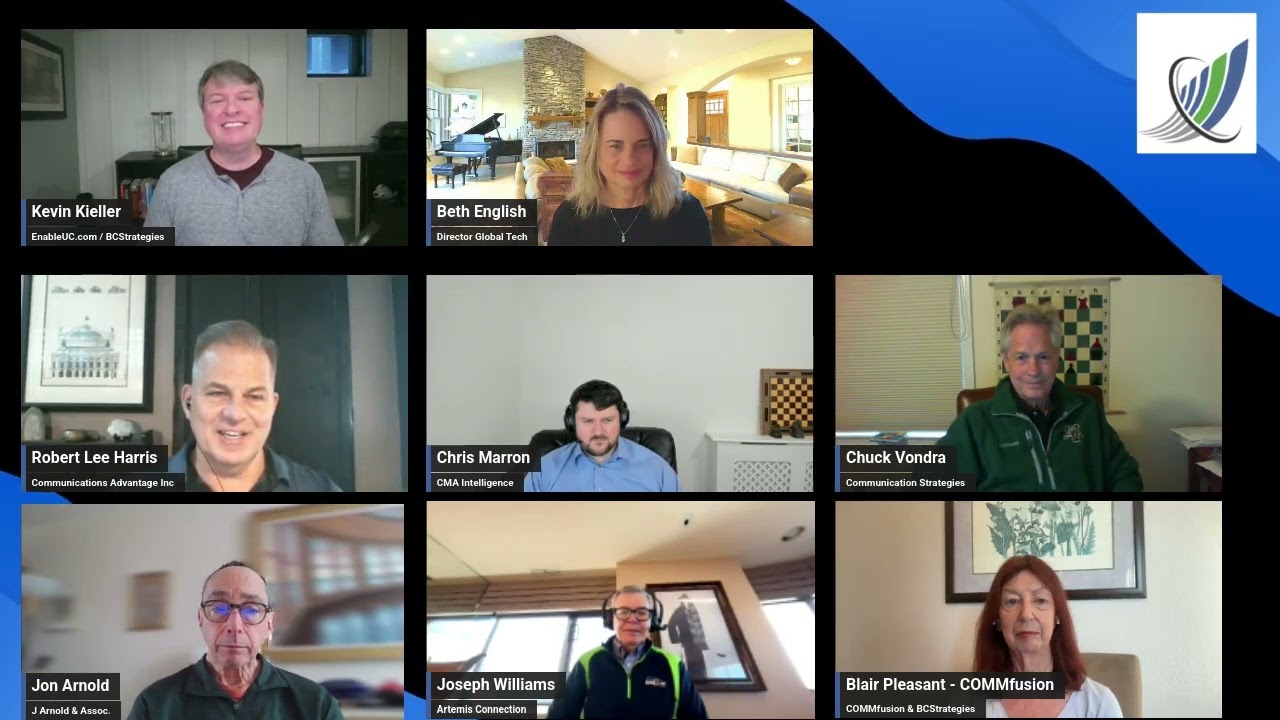
The landscape of Unified Communications (UC) and Contact Center (CC) has shifted from a period of predictable cloud utility to an era defined by extreme complexity and rising costs. As enterprises move through 2026, CIOs and CFOs are facing a "sticker shock" that challenges the original value proposition of the cloud: flexibility and cost savings. This podcast examines the driving forces behind these price escalations and provides expert insights on how to mitigate financial risk. The Rise of the UC Oligopoly and "Enshittification" The industry has entered a phase of consolidation that has dampened traditional price competition. Joseph Williams, known as the "cloud economist," notes that 2025 saw a dramatic 20% lift in prices across the UC industry. He suggests that vendors are no longer competing on price but are instead squeezing their incumbent install bases. Williams observes that the high cost of switching, including security validation and customization, has left many enterprises captive. "I think what's happening... the competition is not as fierce and so rather than compete as much on price... they're working with their incumbent install base and just elevating the fees attached to what they're offering." — Joseph Williams This trend has been described as "enshittification," where vendors stop innovating substantially and instead focus on revenue growth through fee escalation. Williams predicts this environment is ripe for a market disruptor to offer a simpler, lower cost model to break the current oligopoly. The AI Premium: Value vs. Hype Artificial Intelligence is the primary justification for recent price hikes, yet many experts question whether the functionality justifies the cost. While vendors like Zoom and WebEx have included AI assistants at no additional cost, others have introduced significant price increases. Kevin Kieller highlights that these shifts are forcing a total re-evaluation of license value. "Come July 1st, 2026, licenses in the E series and F series, it's going to increase somewhere between 8% and 33% depending on your license. So obviously that's causing people to go and redo the math and figure out if they're getting value for what they're paying for." — Kevin Kieller Consumption Risk and Hidden Operational Costs The shift toward consumption-based pricing models—often using "tokens"—has effectively transferred the financial risk from the vendor to the customer. Beth English notes that many clients are experiencing sticker shock when they realize that every AI transaction incurs a cost. This unpredictability is further complicated by "hidden" fees in the infrastructure. Jon Arnold compares the current state of enterprise communications to the fragmented world of consumer media, noting that the "onus" should be on the vendor to provide better cost management tools. "This sounds so much like cutting the cord with cable for TV and you just revert... you go to streaming and before you know it you got 10 different streaming packages and you're spending twice the amount of money and frankly you were getting a much better deal with cable before." — Jon Arnold Strategic Renegotiation and the Search for ROI Despite the aggressive tactics used by vendors, the experts agree that these costs remain negotiable. Robert Harris points out that many price escalations are simply revenue growth strategies rather than reflections of new product value. Organizations should scrutinize renewals and challenge "fixed commitment" licenses that strip away cloud flexibility. Blair Pleasant suggests that the industry is moving toward a hybrid approach to balance the need for predictability with the reality of AI usage. "I think what we're going to see is really this hybrid mode... a base price plus consumption or usage because finance wants predictability but it gets really hard to do that predictability." — Blair Pleasant Recommendations for Senior Leadership To navigate this period of volatility, IT and finance leaders should prioritize the following actions: Conduct a Math Audit: With major license increases hitting in mid 2026, organizations must redo their TCO models immediately to see if current seats are still justifiable. Evaluate Switching Costs: Compare the long term cost of a 20% price hike against the one-time pain of migrating to lower-cost platforms like Google Meet. Implement Governance Tools: Use automated monitoring tools to track AI consumption and disable "always on" agents that do not provide active value. Demand Predictability: Push vendors for "hybrid" models that combine a stable base price with capped consumption fees to protect the bottom line. As the industry matures, the burden is on the vendor to prove that AI and unified platforms deliver the productivity gains they promise. Until then, the BCStrategies experts advise a cautious, data-driven approach to every new contract and feature activation. Watch the entire discussion here:
- Zoho One Pushes Business Software Beyond Apps Toward a Unified Operating System
Zoho One, Zoho’s flagship suite, has recently undergone a makeover, offering simplicity and unification. Rather than adding another set of features to an already broad portfolio, Zoho has rethought how work actually happens across its more than 50 applications—and redesigned the experience around unified integrations, context, workflows, and data. Announced in November 2025, the new Zoho One reflects a shift away from app-centric workflows toward a platform-centric model that is more user-friendly. The goal of the latest release is not simply to offer more tools, but to offer enhanced unification across three domains: Experience, Integrations, and Intelligence. Experience - from “many apps” to one experience Why is the new Zoho One so important? Most Zoho One customers use more than 20 applications on average, which can be both a benefit and a challenge. The latest release removes boundaries between apps and data by making Zoho One feel like one unified experience, where context is king. The most visible change is Zoho One’s new user experience, which replaces the traditional app menu with “Spaces,” dedicated work areas organized around how people do their work. Spaces groups applications by role, function, and context rather than by product name: · Personal Space holds individual productivity tools · Organization Space centralizes company-wide communication through tools like Forums, Town Hall, and Ideas · Department Spaces group role-specific apps for HR, Finance, Marketing, and other teams These Spaces are accessible from a unified top toolbar and can be customized to reflect how teams actually work. Search, settings, and navigation are consistent across applications, helping Zoho One feel less like a collection of tools and more like a single system. While Zoho has been able to bring data from Zoho apps and third-party apps into dashboards for years, the Spaces paradigm brings these dashboards into a unified interface. Each Space is customizable and accessible from a top toolbar that unifies navigation and search. The new Action Panel aggregates tasks, approvals, and follow-ups from across applications into a single view. Expense approvals, document signatures, project tasks, and deal reviews surface in one place, regardless of which application generated them. With Quick Navigation, users can move across the platform with minimal clicks, reducing friction. Zoho is also expanding its use of dashboards and “Boards” to emphasize outcomes rather than applications. Boards can pull together data and tasks from multiple Zoho apps, and even selected third-party tools, into unified, contextual views. Vani – providing visual collaboration With the addition of Vani, Zoho’s visual collaboration environment, Zoho One now includes a visual-first collaboration space. Vani acts as a shared digital wall for whiteboarding, mind maps, and video calling, all within the same Zoho ecosystem. For many organizations, this could mean replacing several standalone subscriptions for whiteboarding or conferencing tools with one integrated workspace. Integrations - designed for visibility and outcomes Integration has long been a pain point for growing organizations, particularly as stacks evolve organically over time. Zoho One’s latest update introduces a unified integration panel that gives administrators visibility into Zoho-to-Zoho, Zoho-to-third-party, and even third-party-to-third-party integrations. Beyond visibility, Zoho is emphasizing what it calls “outcome-based integrations.” One example is Smart Offboarding, which orchestrates what is typically a fragmented process across identity management, device control, data ownership, and application access. Instead of touching multiple systems to offboard an employee, including transferring files, wiping devices, reassigning reports, forwarding email, administrators can complete offboarding through a single workflow, with Zoho handling the underlying coordination. Intelligence - understanding business context AI plays a prominent role in the new Zoho One, but not as a standalone feature set. Zoho’s AI assistant, Zia, which is trained on all of Zoho’s applications, is embedded across the platform and designed to work with unified data and workflows. Zia Hubs serve as an intelligent content layer, automatically organizing assets such as signed contracts and recorded meetings into searchable, contextual repositories. Ask Zia, which will be accessible from the Zoho One interface, is designed to answer practical, cross-application questions, while surfacing everything from schedules, overdue tasks, deal status, or meeting follow-ups without users needing to jump between systems. Because Zoho owns and integrates the full stack, its AI can operate with a broader and more consistent understanding of organizational data than systems stitched together from loosely connected point solutions. Security, governance, and scale—without a price increase While the user experience changes are the most visible, Zoho has also expanded security and identity capabilities within Zoho One. Privacy and security is baked into all Zoho services on the back end. Features such as Zoho Directory, customer-defined encryption, Cloud LDAP, and CLOUD RADIUS support more robust access control and authentication, particularly for organizations managing distributed or fast-changing workforces. Importantly, these additions come without a price increase. Zoho One remains priced at $37 per user per month, positioning it aggressively against competitors whose comparable capabilities often require multiple products, vendors, and contracts. A platform approach that reflects how work is evolving Zoho One’s latest update reflects a broader industry shift: businesses are increasingly less interested in buying “apps” and more interested in reducing complexity, risk, and wasted effort. By focusing on unified experience, native integrations, and contextual intelligence, Zoho is making a strong case for platform-led business software that prioritizes outcomes over interfaces. Zoho’s latest Zoho One release marks a profound shift in how business software is designed and delivered. It’s less about apps and more about outcomes while eliminating complexity. Essentially, Zoho One is about optimizing business results at every level of the organization. As Zoho notes, customers are not licensing apps – they’re licensing peace of mind.
- UC/CX Vendor on the Key Trends and Predictions for 2026
As analysts, we’re always asked for our year-end predictions, so I thought I would turn the tables around and ask the vendors for their predictions. Here are some of the key trends and predictions for 2026 from various business communication vendors. 8x8 – The platform becomes the value According to 8x8 CEO Sam Wilson, “The market finally stops treating business communications as a smorgasbord of disconnected products. UCaaS, CCaaS, and CPaaS served their purpose as labels, but customers are no longer interested in buying a category. They are buying platforms that unify the communication journey. The platform becomes the value. Applications become interchangeable.” Cisco – Connected Intelligence is how things get done Cisco notes that perhaps the most overarching workplace trend in 2026 will be around what Cisco calls Connected Intelligence . It's a new model of collaboration that connects people to people, people to AI, and, increasingly, AI to AI. Aruna Ravichandran, SVP & CMO for AI, networking, and collaboration, notes: “By 2026, the workplace won't evolve through more apps or digital assistants, but through Connected Intelligence — where people, data, and digital workers [AI agents] work together side by side.Connected Intelligence removes the limits of geography and individual capacity. Knowledge and expertise move instantly to where they're needed. Digital workers surface insights in context, automate workflows quietly, and keep work moving forward — without interrupting human creativity or decision making.” According to Vinod Muthukrishnan, VP & GM of Webex customer experience, "In 2026, the rapid evolution of AI multi-agent collaboration and orchestration will enable a new level of automation and the creation of brand concierge agents. Agentic AI will make it possible for workforces to be reimagined for a new era where these AI agents work side by side with human agents to deliver true connected intelligence and elevated customer experiences." He predicts that by 2026, these technological advancements will significantly transform the role of human agents, leading organizations to adopt new staffing models."AI-powered workforce engagement tools will be utilized, such as quality management and AI routing, and innovations in areas such as real-time speech-to-speech translation. These innovations will enable organizations to fundamentally transform how they manage and optimize hybrid teams of AI and human agents, allowing them to work together seamlessly and deliver true connected intelligence." Dialpad – Agentic AI multiples, not replaces Brian Peterson, CTO & Co-Founder, states, "I know this is a somewhat controversial take, but Agentic AI isn’t going to replace most of what businesses use. 90%+ of companies aren’t tech companies — they rely on their SaaS stack, and that stack is just going to get faster, easier, and more productive. AI doesn’t replace the tools or the expertise behind them; it multiplies both, which is why you’ll keep investing in the products you already run your business on." Five9 – Battles and Consolidation Matt McGinnis, VP of Product, Industry, and Solutions Marketing shares his 2026 predictions: 1. AI Agents begin scaled deployments and start to show large ROI. 2. Data becomes a big story to support hyper-personalization. 3. Agentic managerial tools will begin significant trials and find impactful use cases. 4. Battle between CX/CCaaS and CRM will heat up 5. Industry consolidation and PE activity will increase involving startup AI entrants, CCaaS platforms, CRM platforms, Workforce services, and UCaaS Mitel - Control and trust will redefine the user experience Eric Hanson, CMO predicts that the year 2026 will usher in a new era where users and organizations prioritize factors such as control, privacy, and security, while relegating convenience and user experience (UX) to the backseat. The age of AI and the increased threat surface of cybersecurity will require the introduction of a new UX frontier, one that requires greater safety, resiliency, and flexibility to meet the evolving global dynamics and the increased needs for multi cloud technology solutions and hybrid communications. This shift will be felt at both the individual and organizational levels. As a new generation enters the workforce, we’ll see enterprises moving even further away from the “always on” mobile culture to champion more intentional, balanced connectivity. We can anticipate that this progression will reshape how people connect through technology, placing authenticity, trust, the protection of identity and intellectual property, and user choice at the center of preferred experiences. In response, enterprises will rethink how their technology ecosystems support connection, accelerating demand for delivering private-cloud and edge-based solutions across financial systems, communications, and AI. In 2026, success in enterprise communications will hinge on the ability to always being connected, safely, selectively, and with purpose. And according to CTO Luiz Domingos, Chief Technology Officers will also become Chief Trust Officers. As AI becomes embedded in every process, product, and decision across the enterprise, trust is emerging as the defining measure of success. Simply building reliable systems is no longer enough; organizations must also earn confidence in how data is handled, automated decisions are made, and how technology aligns with shared values. The next generation of CTOs will act as Chief Trust Officers, striking a balance between innovation and integrity. They will champion transparency in AI models, establish clear governance frameworks, and ensure that ethical considerations guide every stage of design, deployment, and oversight. In an environment where AI adoption still faces a significant trust gap, confidence will become as important as delivering new capabilities. Trust will become both a leadership mandate and a market differentiator. Organizations that succeed will treat responsible innovation not as a limitation but as a strategic advantage, proving that in the AI era, trust is the true currency of transformation. Bill Dunnion, CISO, predicts that offensive security becomes the standard for defense, as traditional defensive postures—firewalls, monitoring, and compliance checklists—are no longer sufficient against threats that move faster and learn continuously. Offensive security practices such as red teaming, threat hunting, and penetration testing will evolve from optional exercises to essential functions of risk management. Mature organizations will integrate continuous testing into their operations, utilizing real-world attack simulations to enhance defenses and quantify risk in business terms. Nextiva – AI agent collaboration will usher in a new era of CX We predict that in 2026, AI-powered agents will be the force that finally collapses the traditional silos between the back office and the front office for businesses of all sizes. AI agents are quickly evolving from simple, customer-facing chatbots to embedded workers operating throughout the entire company, from finance and inventory to HR and service delivery. This ubiquitous presence means a customer-facing AI agent will be able to check an order status, initiate a refund, and adjust a delivery schedule in a single, seamless interaction, because the underlying AI has direct, real-time access to the back-office systems. This widespread "AI agent collaboration" will lead to a new era of harmonious customer experiences. The customer will no longer feel the friction of a company's internal structure; they will simply experience the speed and satisfaction of a unified, intelligent organization. NiCE - AI becomes the operating fabric of the experience, not an add-on or afterthought Scott Russell, CEO, notes that “AI-first is the defining shift of our time. Traditional operations cannot keep pace with the exponential consumer. The future belongs to enterprises that embrace a unified AI platform, one that learns, adapts, and compounds value with every interaction.” 2026 trends include: · AI-first becomes the dominant model for customer engagement · Human-centric AI redefines how brands earn trust at scale · Agentic AI and LAMs displace the traditional agent desktop · End-to-end orchestration emerges as the core CX capability · Workflows become the new applications · AI agents collapse silos between front and back office · Systems of engagement replace systems of record · Connected intelligence fuels real-time insights for agentic systems · Experience memory compounds AI value across customer journeys · AI observability becomes mandatory for C-suite buy-in RingCentral – Shift will come from making AI truly operational Kira Makagon, President and Chief Operating Officer, notes that “AI is everywhere, yet nowhere. In 2026, the real shift will come from making AI truly operational. That means integrated systems, governed data, and intelligence that can understand human context at scale.” Additional RingCentral predictions for how AI (and the organizations deploying it) will evolve in 2026: Agentic AI becomes the new architecture of work. We’re entering a moment when autonomous, context-carrying agents (and Agentic Voice AI) become the connective tissue of modern business operations. AI strategy management shifts from scattered to truly governed. Companies are realizing that AI cannot be confined to a single department and must operate with clear, organization-wide rules. Human-AI teams become the new productivity engine CX becomes the proving ground for orchestrated AI agents. CX will be the proving ground for agentic AI because the stakes are high and the potential payoffs are tremendous: shorter wait times, fewer escalations, consistent responses, cleaner handoffs, and customer experiences that don’t differ by the channel used. When larger organizations adopt orchestrated systems (in which AI agents can pass context across workflows, applications, and teams), they’ll unlock efficiencies previously buried by their own complexity. 2026 is the year AI stops operating in silos. The advantage will shift to organizations that can effectively integrate AI as a cohesive system. UJET – AI will prevent interactions from ever needing to happen Matt Clare, VP Product Marketing, states that, “As I think about what's next for CX, I can't help but think there's more in store for AI. We (the industry vendors) have spent almost a decade trying to solve for interaction optimization with AI - both with virtual agent and human-assist use cases. Now that customer adoption is skyrocketing, I can't help but think that there'll be a shift to optimizing for use cases outside of the interactions. For example, we've seen AI agent assist tools deliver great value, but then you go visit an enterprise contact center and customer service reps still have 10+ apps open on their desktop. And we're seeing all these great quality management and analytics capabilities powered by AI now, but contact center administrators are still manually building, testing, deploying, and optimizing their CX operations. The more I think about it, the more I feel like virtual agents, agent assist, and analytics are just the start for AI in the contact center. Lastly, I can't help but also be thinking that the industry has a lot more work to do preventing interactions from ever needing to happen, instead of optimizing for interactions. If I take off my technologist hat, my favorite companies are ALWAYS the ones I never have to talk to... so how do we use AI to drive more towards that as the new gold standard.” Verint: Human and machine collaboration Jaime Meritt, Chief Product Officer at Verint, predicts three key industry-shaping trends: the evolution of contact centers into data hubs, better collaboration between humans and machines, and matured AI technologies. Contact Centers Evolve into Data Hubs : Forward-thinking organizations are treating contact centers as sources of customer insights that drive tangible business outcomes. By 2026, the strategic value of contact centers will be unmistakable. They will be data hubs that collect and organize information, then distribute it throughout the organization for better decision-making. Improved Human-Machine Collaboration : In 2026, the most successful contact centers will facilitate seamless transitions between bots and live agents. In such scenarios, customer interactions flow from a bot to a human and back again – with full context, without requiring repeated information. Agents will also utilize bots for mundane tasks, quicker information retrieval and even answering questions in an agentic manner. This human-machine synergy will blend self-service with human-assisted workflows. This means automating routine requests and extending agent capacity to focus on complex issues that require emotional intelligence, creativity, problem-solving and critical thinking. Matured AI Models : By 2026, contact center AI will move beyond the experimental phase into a more mature, value-oriented approach. Brands today don’t need more tools; they need more results: measurable, reliable outcomes and high ROI from their technology investment. Technology vendors will be under increased pressure to deliver measurable results faster and with clear ways to track performance, value and business impact. Enterprises are also setting policies, guidelines and quality controls to ensure that AI solutions are not just effective, but also secure and compliant. As contact centers handle more sensitive information, enterprise-grade data security and access controls will be even more important to ensure compliance with stringent regulations such as GDPR, CCPA, HIPAA and more. As a result, expect to see more advanced systems with granular access control and better integration between AI platforms and existing enterprise infrastructure. Wildix – Voice is back, but so are security concerns In 2026, voice returns not as nostalgia but as infrastructure. As voice reclaims its place at the center of service delivery, deepfake impersonation and synthetic voice fraud are systemic and no longer edge risks. In response, security will evolve from a feature into a philosophy. Trust evolves from compliance into competitive advantage. Wildix CEO Steve Osler provided several predictions and insights: AI Adoption Becomes a Competitive Requirement: AI will no longer be judged on conceptual brilliance or experimental promise but on what it delivers to the business. Businesses must begin planning AI adoption inside communications, not around it. For those not adopting AI, there is the risk of becoming less competitive than a direct competitor. Security Becomes a Board-Level Priority in Communications: AI-powered impersonation, voice spoofing, and the rise in real-time communication threats accompany the rise of voice AI. Companies will need to take better security measures given the new ways of using AI to impersonate users. Communication-Enabled Business Processes Surge: In 2026, the biggest shift will be automating the communication steps inside business processes, not just phone calls or chats. AI Will Replace Tasks, Not Entire Workforces: AI takes over repetitive, high-volume tasks but enhances human roles. Pricing Models Will Shift Toward Usage: Agentic AI consumes significant computing resources, requiring a model change. Steve predicts user licenses will eventually become free. Wildix Chief Commercial Officer Jason Uslan added several channel-related predictions: Managed Service providers (MSPs) will lead the redesign of communication experiences across the business. Successful MSPs will transform into consultants and understand their customers, their workflows, their employees. MSPs will need to verify where money is spent, what ROI is achieved, and whether workflows improve. Workflow expertise becomes the new differentiator, and partners that can map workflows, identify friction, and implement targeted automation will win. Channel ecosystems shift into consultative intelligence layers, helping businesses understand not just what to adopt, but why, where and how to use it responsibly and profitably. 2026 – Going from Hype to Business Outcomes COMMfusion expects that 2026 will be all about data, workflows, and orchestration, with a focus on managing the combined human and AI agent workforce. We’ll see an increasing number of Agentic AI trials and deployments, with many successful outcomes, but also many public failures, as some companies rush to deploy agentic AI without proper testing. Expect to see several high-profile security breaches that will make some companies hesitant to deploy agentic AI, as vendors rush to highlight their security capabilities. Real-world deployments will lag behind vendor hype, but businesses across multiple verticals will quickly move to take advantage of the potential cost savings and productivity enhancements that generative and agentic AI provides. The companies that deploy AI for the right use cases (particularly for specific vertical markets), while providing the necessary training and user adoption strategies, along with proper guardrails, security, and governance, will transform their operations with positive outcomes for both employees and customers. There will be ups and downs along the way, but make no mistake – 2026 sets the stage for when agentic AI changes everything.
- Having Fun With Year-End Vendor Awards
As we wrap up the year, I thought it would be fun to hand out my own set of industry awards. Take these with a grain of salt—many are just for entertainment. Most reflect my experiences and insights from various analyst events and countless vendor interactions throughout the year. If you want to nominate a vendor for a category, drop it in the comments or send me a message. Best Marketing Ingenuity – 8x8 CMO Bruno Bertini delivered a bold rebrand that literally breaks out of the box. The latest marketing campaign - “The Power of You”—complete with cinematic visuals and generative AI production—puts customers at center stage and highlights their achievements in a fresh, engaging way. Best Persistence – Avaya Despite skepticism from naysayers, Avaya continues to innovate. Its Infinity Platform provides a practical evolution path for existing customers, and the company added agentic AI and Model Context Protocol (MCP) support—proof that Avaya isn’t fading away anytime soon. Best Catch Up (or Most Improved Player) – Cisco Cisco is back in the CCaaS spotlight. After trailing the pack for a while, Cisco now offers a much more complete portfolio—agentic AI, new AI-powered quality management, industry-specific integrations, and a compelling “connected intelligence” vision where humans and AI collaborate seamlessly. And the results have been impressive – incredibly strong cloud contact center product orders highlighting the growth and momentum.. Best “We’re Back!” Reinvigorated Marketing (and AR) – Tie: Dialpad and UJET Dialpad has reemerged after a relatively quiet period, refreshing its marketing and analyst relations and launching new agentic AI capabilities aimed at shaking up the market. Expect to see and hear a lot more from Dialpad in the coming months as the company sets its sights on leading customers to agentic AI. UJET let Google take the sales and marketing reins early in their partnership, but is now back on the scene with renewed channel engagement and an energized sales organization. Best Hope for Humans and AI Working Together – Five9 Five9 flipped the script: instead of AI augmenting humans, it’s humans augmenting AI. By keeping people in the loop, Five9 envisions human and AI agents working hand in hand—not replacement, but enhancement. Best Dressed CEO – Five9 CEO Mike Burkland stole the show at the CX Summit in full Nashville cowboy style. 'Nuff said. Best Views of NYC at an Analyst Event – Global Relay Global Relay’s New York HQ wowed analysts with incredible views, as well as in-depth and interesting sessions on digital communications governance, archiving, compliance, and communications surveillance for collaborative messaging applications and front-office workers. Best Display of AI at the Sphere – Google Google opened Cloud Next 2025 with an AI-powered sneak peek of an enhanced “Wizard of Oz” at the Las Vegas Sphere. Using DeepMind’s capabilities and its latest LLMs, Google used AI-driven "outpainting" to extend scenes, enrich environments, and reimagine the film for the Sphere’s curved, immersive display. Best Ability to Say “I Told You So” – Mitel While the industry raced toward multitenant public cloud, Mitel held its ground, insisting that public cloud isn’t the answer for everyone. Many organizations continue to prefer hybrid, private cloud, or on-prem solutions—vindicating Mitel’s commitment to customer choice. Best “Come Together” Moment – NiCE NiCE’s acquisition of Cognigy was a masterstroke. Pair the leading CCaaS vendor with the leading conversational AI provider, and you get an impressive, forward-looking Customer Engagement Platform. The deal positions NiCE to innovate faster and gain momentum in the CX AI market. Best Job Filling Really Big Shoes – Scott Russell, CEO, NiCE Scott has a strong vision for the company, along with contagious energy. His focus on partnerships and openness should help NiCE expand to other areas beyond the contact center and continue strong growth and leadership. Best at Minding the Gap – RingCentral RingCentral filled a valuable market gap with its Customer Engagement (CE) Bundle—combining calling, collaboration, and light contact center features. It’s ideal for the underserved market of companies that can’t afford to miss customer interactions but don’t need the complexity of a full contact center solution. Best “We’re Listening – and Then Some” – Sprinklr Sprinklr evolved from social listening origins into a full Unified Customer Experience Management (Unified-CXM) provider. Its AI-native platform spans Service, Social, Marketing, and Insights—and uniquely leverages social listening to enhance CX intelligence. Best Way to Stand Out in a Crowd – Talkdesk Talkdesk keeps doubling down on its vertical expertise, taking specialization a level deeper with sub-verticals (think healthcare providers vs. payers). This isn’t lip service—they’re restructuring go-to-market and sales around these industries and going genuinely deep. Best “We’re Still a UCaaS and CCaaS Player” – Vonage After being acquired by Ericsson, Vonage was primarily focused on its Network APIs and CPaaS business, making some people wonder about the future of its UCaaS and CCaaS offerings. Vonage put those doubts to rest, introducing new Voice AI Agents, expanding partnerships with Salesforce and ServiceNow, enhancing its VCC Intelligent Workspace with AI, and more, to engage customers and employees across all channels from anywhere with context. Cutest Bots – Verint Verint’s ever-expanding bot family continues to grow—forecasting bots, wrap-up bots, knowledge bots, and many more. These automation tools streamline workflows and consistently deliver measurable results: lower labor costs, improved CX and EX, and higher revenues. Best Kept Secret (For Now) – Wildix Wildix is a well-established European vendor quietly gaining traction in North America. At its first analyst event, the company unveiled a strategic vision rooted in European values and a purpose-built, partner-led approach for SMB and mid-market customers. The secret is definitely getting out… Best Longest List of Applications – Zoho Zoho wins this by a landslide: 88 products (and counting), with more than 50 tightly integrated applications and the Zoho One bundle offering 45+ apps. They may have added another one while you were reading this. Best Pivot – Zoom Zoom pulled off a highly successful transformation from a video/meetings company to an AI-first platform for employee and customer experience. Zoom CX is growing at high double digits year over year, as customer counts are up 60%; while the number of Workvivo customers rose 70% in Q3. “And the Emmy Goes To” - Zoom Zoom earned an Engineering, Science & Technology Emmy Award for “Zoom for Broadcast,” used widely by broadcasters to streamline high-quality video and audio integrations. If you’d like to add new categories, suggest nominations, or disagree with any of these—let me know!
- Talkdesk Analyst Summit 2025 – All About CXA
At its Analyst Summit in Savannah, GA, Talkdesk highlighted its new platform—and the market category it hopes to define: Customer Experience Automation (CXA). As organizations look to automate the entire customer journey, not just customer service interactions, Talkdesk sees CXA as the platform to orchestrate and optimize CX end-to-end, both before and after live interactions. Talkdesk positions CXA both as a new market category and as its multi-agent automation platform, designed to automate and scale service, sales, and support processes across the full customer lifecycle. CXA: The Evolution of AI Noting that we’re in the era of orchestrated automated CX, CEO & Founder Tiago Paiva explained that Talkdesk is positioning CXA as the next evolution of enterprise AI, enabling multi-agent orchestration. He explained that while CCaaS remains valuable, CXA is increasingly what resonates with customers. CXA brings together intelligent, autonomous AI agents—each with a defined role and shared context—to solve complex CX challenges across front- and back-office operations. Although the platform is entirely new, it supports the AI applications already offered on Talkdesk’s CCaaS platform. Importantly, customers don’t buy CXA as a product. They consume AI capabilities on a usage basis—paying only for what they use across Autopilot, Navigator, Agentic Workflows, and other AI-powered experiences built on the platform. CXA is the underlying engine; customers simply tap into it as they deploy and scale AI across their customer journeys. Talkdesk describes CXA as an automation platform built to learn, adapt, and improve through a continuous loop of discovery, build, orchestration, and measurement. At the core is the Talkdesk Data Cloud, which unifies and structures all customer interaction data and enterprise knowledge. This foundation enables accurate retrieval, reasoning, and decision-making for every AI agent. CXA combines this data layer with multi-agent orchestration—specialized autonomous agents working together with shared context—to automate complex workflows across front- and back-office operations. The orchestrator coordinates these agents, dynamically routing tasks, resolving dependencies, and ensuring accuracy through continuous access to real-time data and knowledge. This combination of high-quality, unified data and multi-agent intelligence is the primary source of CXA’s differentiation. It underpins applications such as Navigator, Copilot, Autopilot, and QM Assist, and brings intelligent, end-to-end workflows to industries including healthcare, financial services, retail, travel, and the public sector. As CTO Munil Shah explained, “We look at CXA as an automation platform—not just infusing the contact center with AI, but providing AI automation, integrations, triggers, workflows, and orchestration in one platform that’s purpose-built for CX and industry verticals.” CXA supports complex use cases that go beyond traditional CCaaS, such as automated scheduling, shopping cart recovery, hospital post-discharge workflows, outage management, and more. A major differentiator is CXA’s ability to run on top of Talkdesk CCaaS or as a standalone platform, working with third-party CCaaS, and even on-prem environments from Avaya, Cisco, and Genesys. A Deep Dive Into CXA To better understand CXA, I spoke with Pedro Andrade, VP of AI, who walked through how agentic AI powers the platform. He noted that these AI agents can reason, think, and act autonomously, and described the virtuous lifecycle at the heart of CXA: Discovery: Mining and understanding customer data; identifying what should be automated. Build: Using low-code/no-code tools to create workflows and test automations and agents. Orchestration: Deploying agents throughout the customer journey with multi-agent coordination. Measure: Evaluating automation performance and the impact of AI agents. This cycle repeats for every use case. Pedro also detailed how CXA applications attach AI agents to workflows so they can take action when needed. Industry Specialization Industry specialization remains one of Talkdesk’s strongest differentiators. The company focuses deeply on vertical and sub-vertical needs—such as healthcare payers and providers, credit unions, and casualty insurance—and delivers tight integrations with leading industry applications. I spoke with Rohit Madhavarapu, VP of Product Management for Industries, about Talkdesk’s approach, which centers on: Purpose-built vertical products Verticalized teams with real expertise Business process transformation aligned to industry needs Rohit emphasized that Talkdesk’s goal is to remove friction and create better experiences. Talkdesk also hires industry specialists (for example, Rohit came from Epic) to provide specific vertical expertise. He also explained how CXA enhances their industry strategy and helps customers apply automation effectively across their businesses. Go-To-Market Evolution As Talkdesk expands from CCaaS into CXA, the shift requires a different sales and GTM strategy. In my conversation with Jen McDonald, SVP of Americas, she explained how Talkdesk reshaped its sales team to ensure deep vertical and use case knowledge—especially as the company targets larger enterprises. Rather than selling features, the team now collaborates with customers to ideate on impactful workflows. She also highlighted the role of channel partners in identifying use cases and deploying multi-agent workflows in a matter of weeks. Key Messages From Talkdesk To discuss the key messages from the event, I spoke with CMO Neville Letzerich, who highlighted three key themes: CXA as both a new category and a core product Talkdesk’s industry specialization Enterprise scalability and reliability Neville emphasized that while Talkdesk is moving upmarket, CCaaS continues to play a foundational role by supporting human agents, while CXA powers the AI workforce. He also stressed that customers should begin with a few vertical use cases, realize value quickly, and expand from there. Closing Thoughts Talkdesk clearly recognizes that CCaaS is becoming commoditized as Agentic AI takes over many functions traditionally handled by human agents. Rather than wait to be disrupted, the company is intentionally repositioning itself as a CX automation vendor. As Munil noted, “We saw AI as being transformative and wanted a separate product category that takes us beyond CCaaS.” Still, Talkdesk continues to invest in CCaaS—enhancing WFM, the agent desktop, routing, integrations, and more. The company made it clear that CCaaS is for human agents; CXA is for AI agents . Talkdesk’s deep industry focus strengthens its differentiation, influencing how it sells, who it targets, and how it delivers ROI. But the shift from CCaaS to CXA won’t be without challenges: repositioning takes time, some channel partners may resist change, and selling automation outcomes requires new motions and new buyers. Whether CXA becomes a widely recognized market category remains to be seen. Other companies—like Verint, Sierra, and NiCE—may join Talkdesk in defining the category, potentially leaving traditional CCaaS vendors behind if they don’t evolve. What stood out most at the summit was Talkdesk’s honesty about learning as they go. The CX AI landscape is still the Wild West—uncertain, fast-moving, and competitive. But based on what I saw and heard, Talkdesk is positioning itself to break free from its CCaaS roots and emerge as a major force in the new era of Customer Experience Automation.